
Selling Your Home – Negotiation
What Is Home Sale Negotiation?
Home sale negotiation refers to the process of reaching agreement on price, terms, and contingencies during a real estate transaction. Strong negotiation skills can increase your final sale price and reduce stress during closing.
First, do your homework. Learn as much as possible about the buyer and current market conditions. Next, avoid revealing too much information about your motivation. Finally, take your time. Do not allow pressure to rush your decision.
If you feel unsure about your negotiating ability, work with an experienced real estate professional.
How Contingencies Affect Home Sale Negotiation
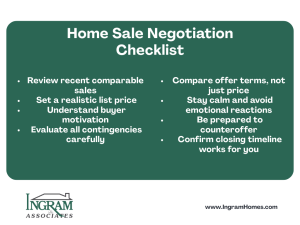
Contingencies play a major role in home sale negotiation. Most offers include two standard contingencies.
A financing contingency protects the buyer if loan approval fails. Meanwhile, an inspection contingency allows the buyer to evaluate the property condition.
In a strong seller’s market, you may reject excessive contingencies. However, in a buyer’s market, flexibility often becomes necessary.
Because contingencies affect risk and timing, review each one carefully before accepting an offer.
How Price Is Set Before Negotiation Begins
Pricing strategy sets the stage for home sale negotiation.
Select your list price based on recent comparable sales in your neighborhood. A comparative market analysis provides current data to support your decision.
When interviewing agents, review sales reports carefully. Ideally, the data should be no more than three months old. If multiple agents agree on a range, that consensus likely reflects market reality.
Avoid listing far above market value. Overpricing often weakens your negotiating position.
Should You Entertain Low Offers?
Low offers are common in home sale negotiation. In many cases, buyers test seller flexibility before making serious bids.
Unless your home is severely overpriced, extremely low offers often receive rejection. However, motivation matters.
For example, a buyer offering a lower price with a quick closing may present an attractive option. Likewise, a cash offer without financing contingencies may carry less risk than a higher offer with multiple conditions.
Instead of reacting emotionally, evaluate the full package.
Seller’s Market vs Buyer’s Market
Market conditions influence home sale negotiation power.
In a seller’s market, demand exceeds supply. As a result, you may receive multiple offers and limit contingencies.
In contrast, a buyer’s market requires greater flexibility. When supply exceeds demand, stronger terms and competitive pricing become essential.
Understanding local conditions strengthens your strategy.
Market Value vs Appraised Value in Negotiation
Market value reflects what buyers are willing to pay under current conditions. Appraised value represents a professional estimate used by lenders.
Because lenders require appraisals during financing, a low appraisal can impact home sale negotiation. If appraisal results fall below contract price, buyers may request price adjustments.
To avoid surprises, price your property according to realistic market data.
Is Timing Important When Selling?
Although there is no perfect time to sell, seasonal trends influence negotiation leverage. Typically, the market strengthens from late winter through early summer, when buyer activity increases. In contrast, activity often slows in mid-summer and again during the holidays.
For current housing trends and seasonal data, review national real estate market statistics published by the National Association of Realtors. Understanding recent sales activity can help you time your listing more strategically.
National Association of Realtors market statistics
https://www.nar.realtor/research-and-statistics
Final Thoughts on Home Sale Negotiation
Home sale negotiation requires preparation, discipline, and awareness of market conditions. Therefore, evaluate price, contingencies, timing, and buyer motivation carefully.
If you need help setting a competitive list price, review our guide on how to price your home to sell.
READ HERE: How to price your home to sell