

How to Price Your Home to Sell
List Price vs Sales Price
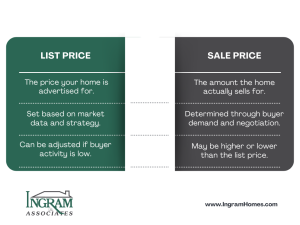
If you want to understand how to price your home to sell, start with the difference between list price and sales price.
The list price is the amount your home is advertised for. It reflects what you hope to receive. The sales price is what the property actually sells for. It may match the list price, exceed it, or fall below it depending on market demand and pricing accuracy.
If your home receives little interest during the first few months, then you may need to adjust the price to reflect current market conditions. Otherwise, you risk extended time on market and reduced buyer urgency.
The Two Most Important Factors When Selling
When learning how to price your home to sell, remember that price and condition matter most.
First, price your home correctly. To do that, review recent comparable sales with your agent. In addition, you can hire a professional appraiser, which typically costs between $200 and $300.
Second, evaluate your home’s condition. Repair visible cosmetic issues that could discourage buyers. In a slower market, you may need to lower the price or complete major repairs to stay competitive.
In addition, make sure your home receives proper exposure through open houses, strong online listings, professional signage, and MLS placement. If marketing efforts are lacking, address it quickly.
How Market Conditions Affect Pricing
Seasonality and buyer demand influence pricing strategy.
Because many buyers prefer spring and summer moves, the market often strengthens early in the year. Activity may slow in late summer and again in winter. However, motivated buyers exist year round.
Understanding timing helps you position your list price strategically.
Market Value vs Appraised Value
When deciding how to price your home to sell, you must understand market value and appraised value.
The appraised value is a certified appraiser’s professional opinion at a specific time. Lenders require an appraisal during the loan process.
Market value reflects what buyers are willing to pay in the current market. A comparative market analysis estimates this value based on recent comparable sales.
Both tools provide guidance, although market value typically drives your pricing strategy.
How to Sell a Slow Moving Home
If your home is not selling, pricing is often the issue. In many cases, overpricing slows activity before buyers even schedule showings.
Start by reviewing recent comparable sales again. If necessary, lower the price to attract attention. Also reassess the property’s condition and correct small issues that may reduce perceived value.
At the same time, confirm your home has maximum exposure online and locally. Strong marketing supports effective pricing.
In certain financial situations, options such as a short sale may be discussed with your lender. However, adjusting the price remains the simplest and most effective strategy.
How Is the Price Set?
Accurate pricing requires current data. Therefore, rely on recent comparable sales rather than outdated figures.
Use a comparative market analysis based on recent neighborhood sales. Ideally, those sales should be within the past three months. If multiple agents agree on a price range, that consensus often reflects realistic positioning.
Be cautious of pricing recommendations significantly above market range. Overpricing can delay offers and reduce final sales price.
How to Determine What Your Home Is Worth
Two standard methods determine value. Specifically, these methods provide both informal and certified pricing guidance.
A comparative market analysis provides an informal estimate based on similar homes. An appraisal provides a certified valuation based on comparable sales, square footage, location, and condition.
When you understand how to price your home to sell, you use these tools to support a competitive list price.
How to Prepare a House Before Listing
Presentation supports pricing strategy. As a result, buyers are more likely to perceive value aligned with your asking price.
Improve curb appeal by maintaining landscaping and cleaning exterior surfaces. Repair chipped paint and confirm basic fixtures function properly. Deep clean kitchens and bathrooms. Organize closets and remove odors.
Small improvements increase buyer confidence and reinforce your asking price.
Should You Accept a Low Offer?
In a buyer’s market, a motivated seller may consider a lower offer. In a stronger market, low offers are less likely to succeed.
Evaluate more than price alone. Consider contingencies, repair requests, financing terms, and whether the buyer is paying cash.
Strong terms sometimes outweigh a slightly higher offer.